
Single-phase motors are a convenient choice when three-phase power is not available, such as in small machines, fans, and buildings.
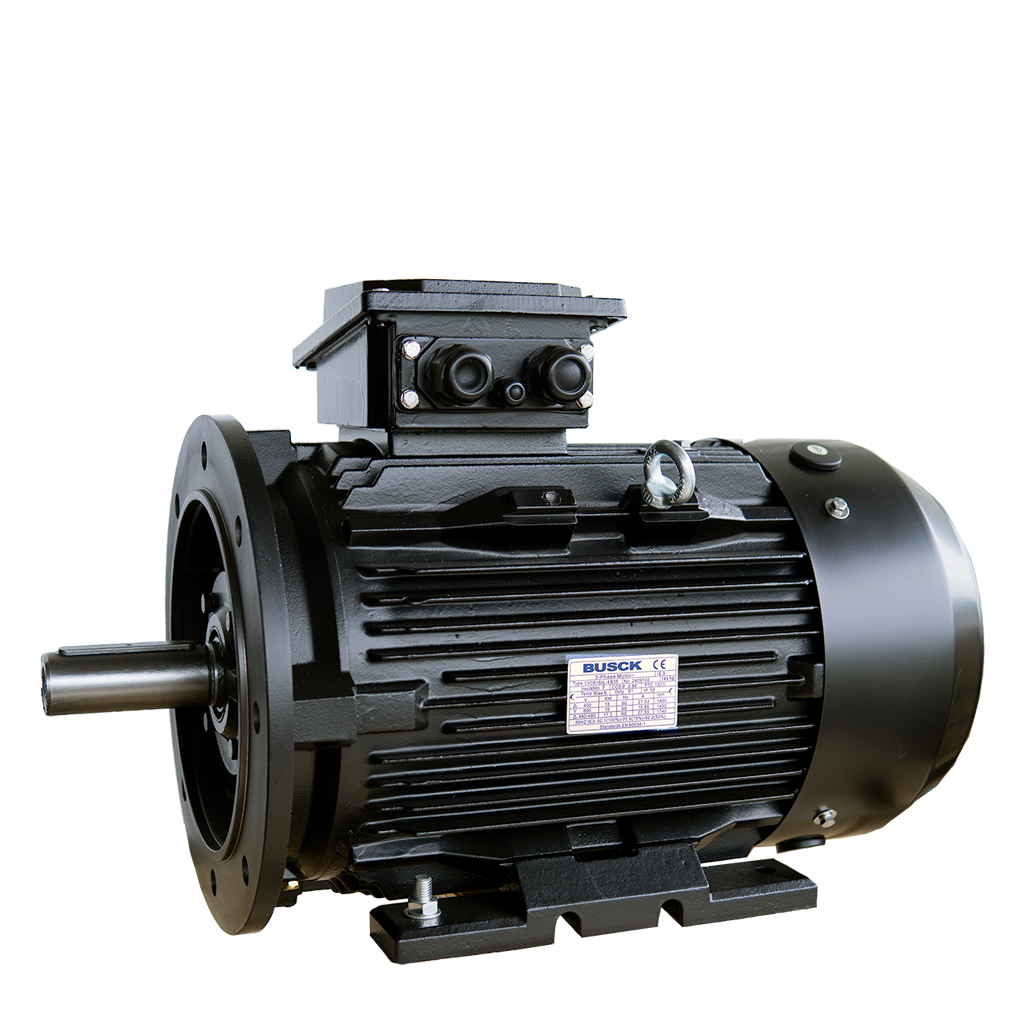
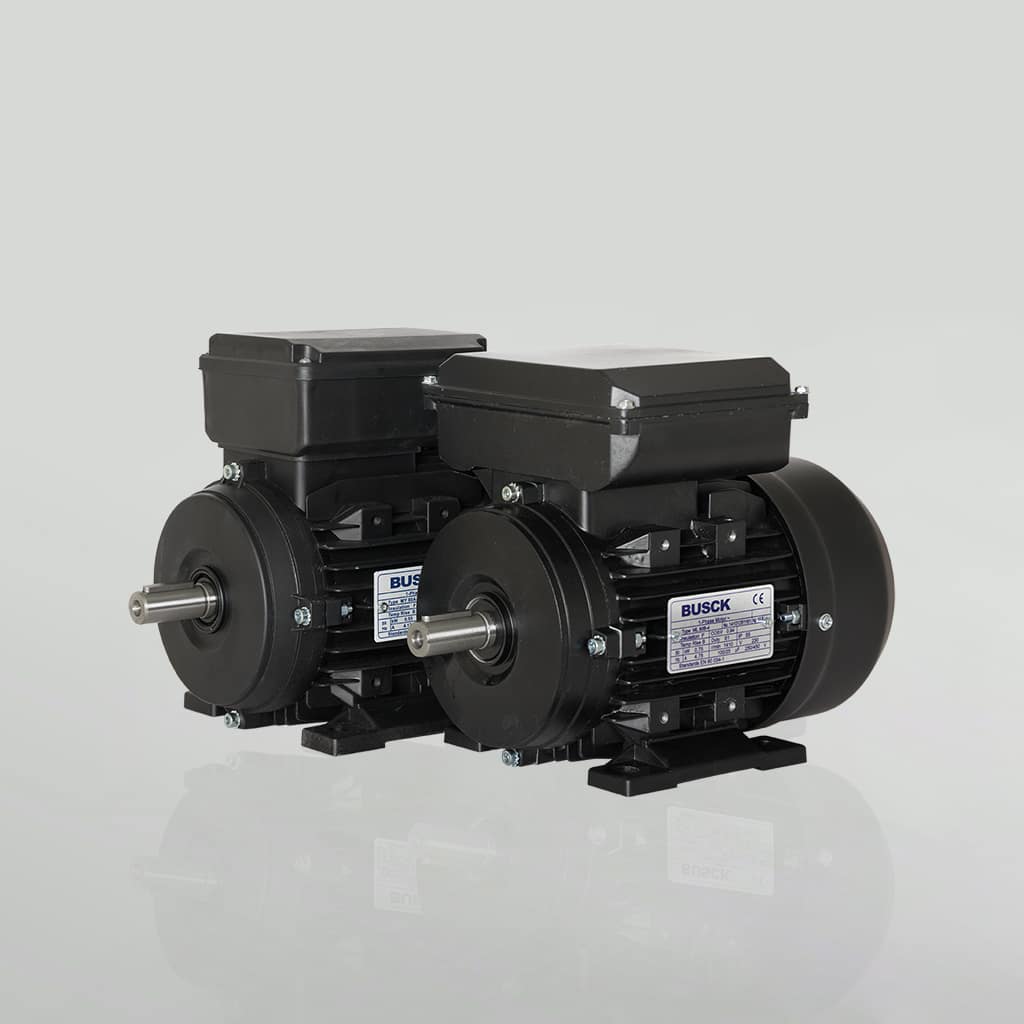
Busck motors for both lighter-duty starters (MY series) and applications requiring high starting torque (ML series). The product range spans from 0.06 to 2.2 kW and is typically available for quick delivery directly from stock.
Busck , MY and ML
Single-phase motors are classified into different types based on their design and starting requirements. The most common types are motors with a running capacitor (MY) for simpler starting conditions, and motors with both a starting and running capacitor (ML) for applications requiring high starting torque.
Busck – for applications requiring high starting torque
These motors are equipped with two capacitors, one of which is disconnected by a centrifugal switch or relay when the motor reaches its rated speed. This combination provides excellent starting characteristics while ensuring stable and efficient operation, even in demanding applications.
Busck – for easier starts
These motors are equipped with a running capacitor and are designed for stable and reliable operation in applications with lower starting resistance. The design provides excellent performance during normal operation, but lower starting torque than the ML series. The motors are therefore an excellent choice for applications with lighter starting conditions, such as fans and centrifugal pumps.
The motors are manufactured in accordance with the European standard IEC 34-1 and are supplied in aluminum with a RAL 9005 finish. The power range extends up to 2.2 kW, and these motors are typically available for quick delivery directly from stock.
How Single-Phase Motors Work
For an electric motor to be self-starting, a rotating field is required in the motor. In a 3-phase motor this is achieved by the phase shift in the three phases. In a 1-phase motor, an additional winding is required, which is fed with a voltage phase-shifted relative to the voltage across the main winding.