Avoid common mistakes when replacing
Many people base their decision on power (kW) when replacing a motor, but focusing solely on power (kW) is a mistake that can result in the new motor not fitting physically or functioning properly in the application. More information is needed to find the right replacement motor.
This is important to keep in mind when replacing an electric motor
- Power – use the same power setting.
Read more below. - RPM – The correct RPM is very important. The most common RPMs are 2-pole (≈2,800 rpm) and 4-pole (≈1,400 rpm).
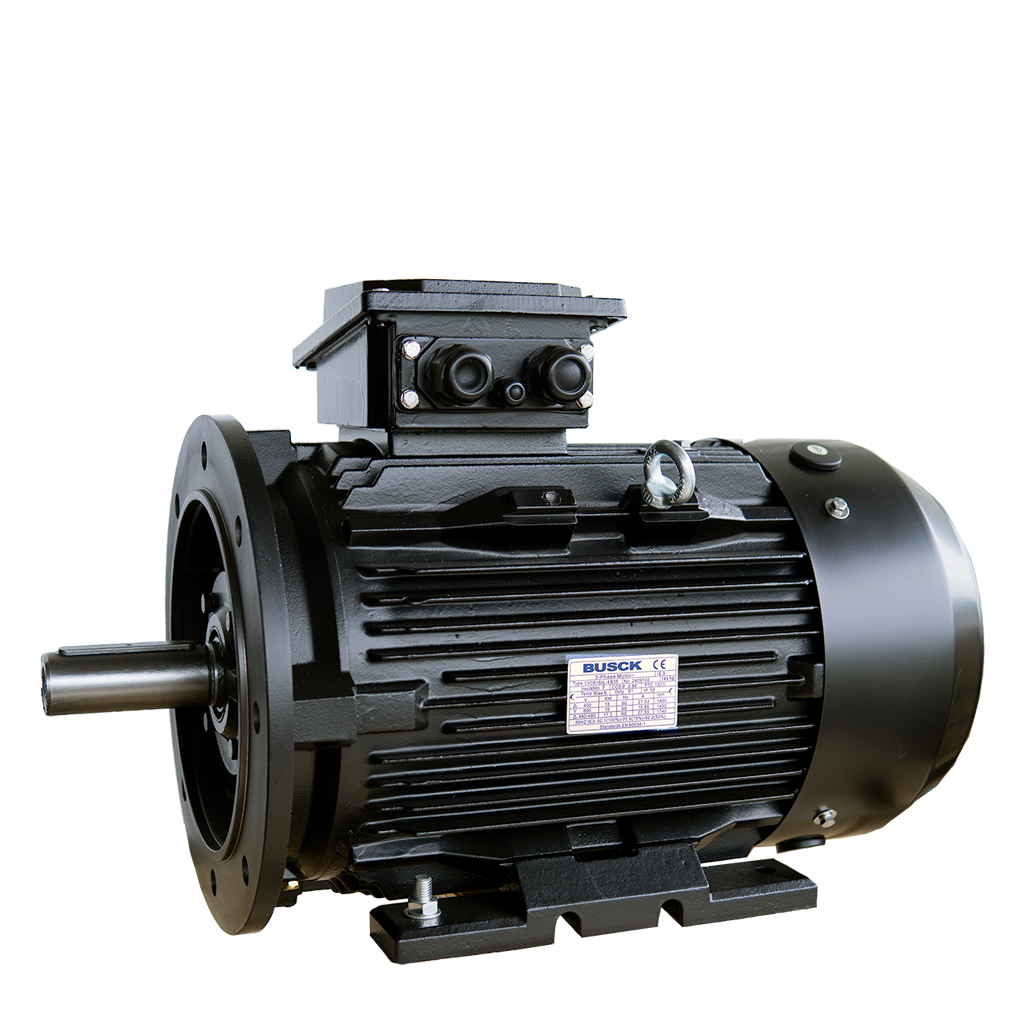
Read more below. - Mounting – A motor can be mounted in many different ways. Common mounting options include B3 (foot), B5 (large flange), or B14 (small flange).
Read more below. - Shaft – the diameter, length, and keyway must match the coupling.
Read more below.
Normally, you should choose a motor with the same power rating as the one being replaced. You may be able to go up one power rating if the size is correct. Do not choose a lower power rating unless you are certain that the actual power requirement is lower.
The following approximate RPM values apply at a frequency of 50 Hz:
- 2-pole ≈ 2,800 rpm
- 4-pole ≈ 1,400 rpm
- 6-pole ≈ 950 rpm
- 8-pole ≈ 700 rpm
At a frequency of 60 Hz, the rotational speed is 20% higher
The most common standard assemblies
- B3 (IM 1001): A pure foot motor that is mounted on feet.
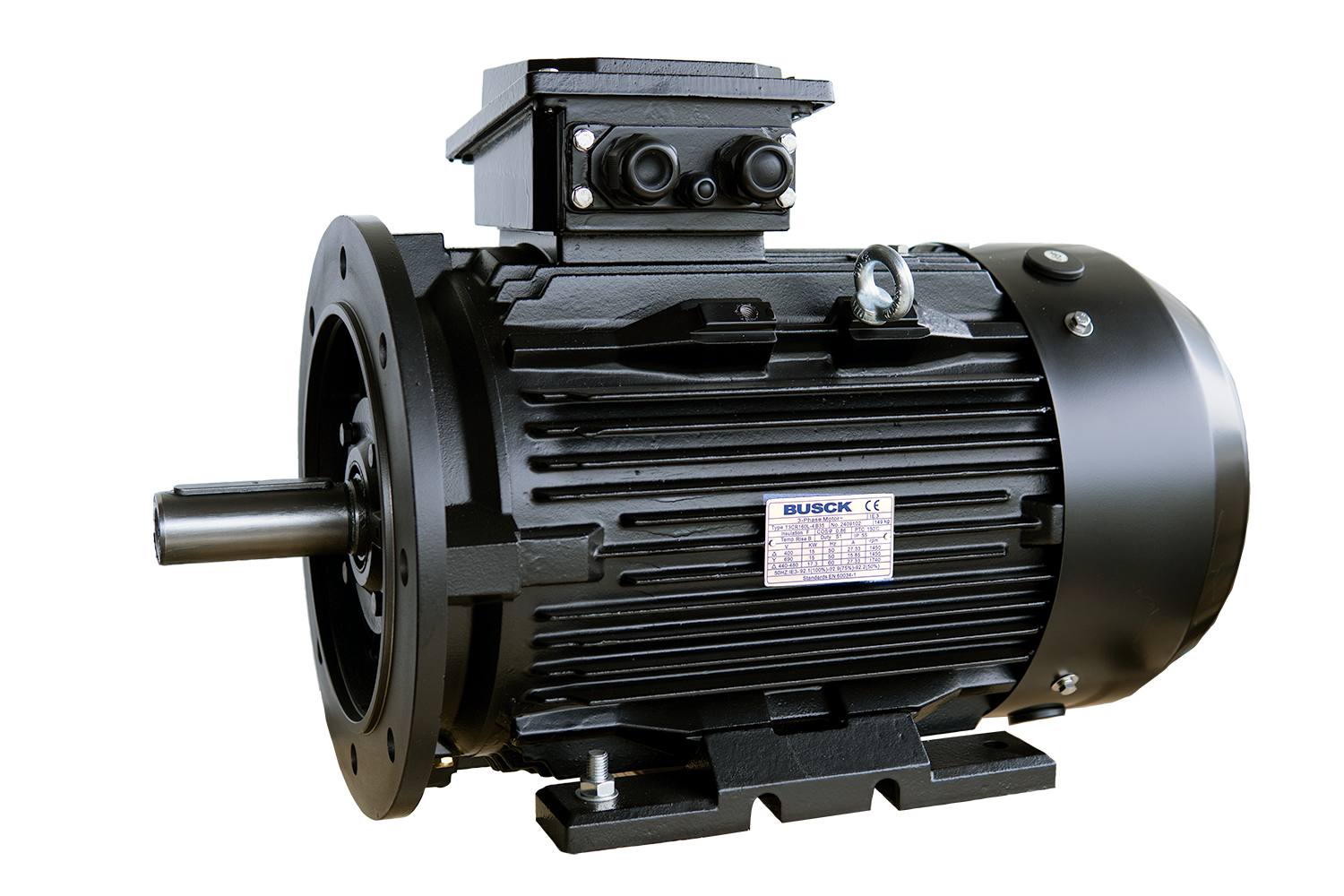
- B5 (IM 3001): A flange-mounted motor with a large flange and through-hole mounting.
- B14 (IM 3601): A flange-mounted motor with a small flange and threaded mounting holes.
- B14M: A variant known as the small-flange medium (B14 medium-flange).
- B35 (IM 2001) A motor with both a base and a B5 flange.
- B34 (IM 2101) A motor with both a foot and a B14 flange.
There are many more variations. If the motor is equipped with drain holes, its physical orientation is important to ensure that the drain holes are positioned at the lowest point.
- Diameter (mm)
- Length (mm)
- Wedge groove – is there a groove for the wedge, and do the dimensions match?

Have this ready when you place your order
- Power (kW)
- RPM
- Voltage (V)
- Frequency (Hz)
- Axle height / IEC size
- Assembly (B3, B5, B14, B35, B14)
- Protection class (IP55 or other)
- Efficiency class (IE2, IE3, IE4)
- Operating mode (S1 continuous, S3, S6, or other intermittent operation)
- Material (aluminum or cast iron)
- Environment (Explosion-proof, high ambient temperature, high humidity)
- Thermal protection (e.g., PTO bimetallic contacts or PTC thermistors)
- Is the motor equipped with a brake?
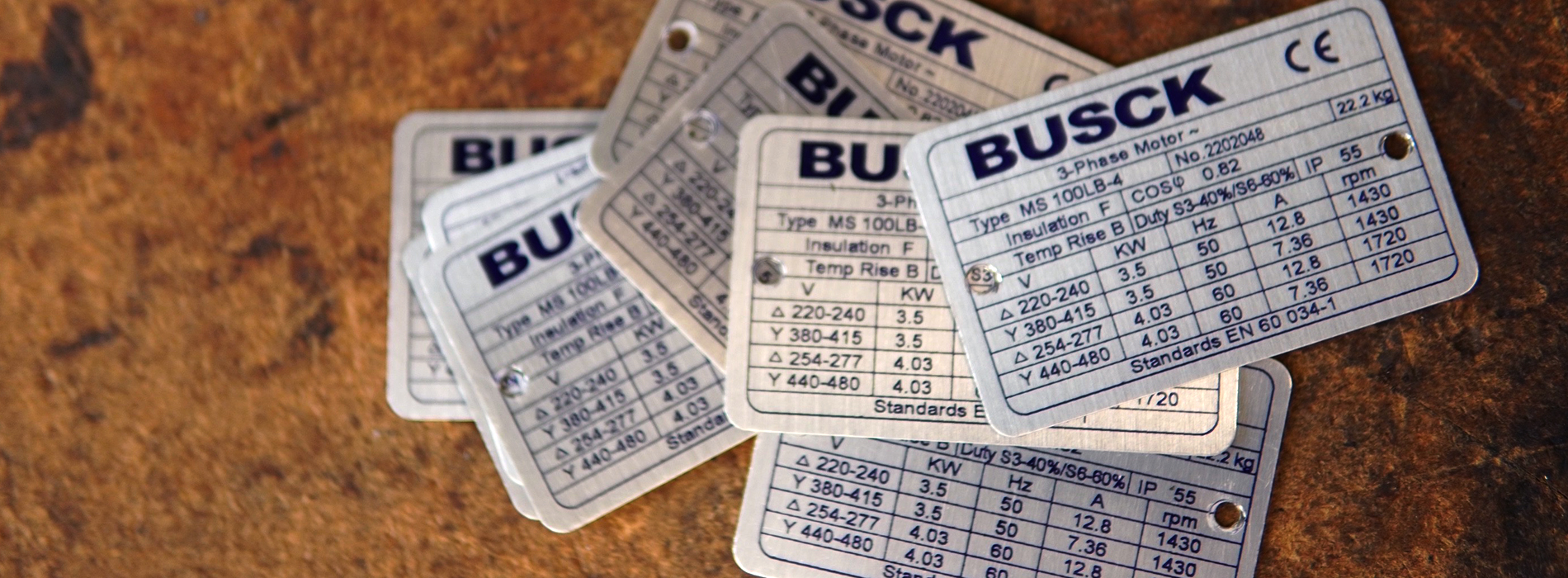
Do you have the nameplate?
Send us a photo right away—it’s the quickest way to find the right engine.
Contact us for more informationCommon mistakes
- Selects based on kW and ignores the RPM
- Confuses B5 and B14
- I guess “it looks the same”